When 1975 Meets the Beat Grid: How Young US Producers Are Mining the Simigwa Sound
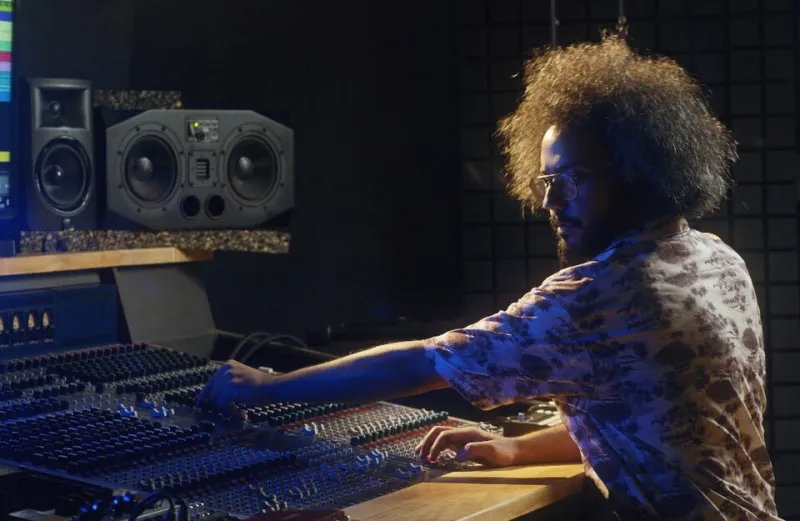
Photo: Unknown, CC0, via Wikimedia Commons
There's a moment happening in studios from Los Angeles to London right now, and if you're a fan of the Simigwa sound, you already understand it. The Afrobeats explosion — Burna Boy headlining stadiums, Tems on every American pop radio hook, Wizkid selling out the Garden — has sent a new generation of producers digging backward through African music history. And the deeper they dig, the more they keep landing on the same place: Ghana, the 1970s, the birth of the sound Ambolley started.
The Sample Hunt Comes to Sekondi-Takoradi
Talk to any young beatmaker working in the Afrobeats lane and you'll hear the same confession: the highlife catalog is the cheat code. Those interlocking guitar figures, the horn stabs, the way the percussion breathes instead of clicks to a grid — it's raw material that modern production can't fake. Producers who grew up on FL Studio are now spending their advance money on original Ghanaian pressings, hunting through Discogs for anything with a 1970s Ghanaian label credit.
The math is simple. A sampled guitar line from a fifty-year-old highlife record carries texture you can't synthesize — tape hiss, room sound, players listening to each other in real time. When that gets looped under a modern drum pattern, you get the warmth that's defined the best Afrobeats records of the last decade. A lot of those records trace back to the same lineage Ambolley broke open with his 1975 debut.
Why the Simigwa Rhythm Won't Sit Still
What makes Ambolley's catalog particularly irresistible to producers is its restlessness. Simigwa wasn't pure highlife — it folded in funk, soul, and Afrobeat attitude before anyone had a name for the blend. That hybridity is exactly what today's genre-blind producers are after. A track that already refuses categories in 1975 slots naturally into a beat tape in 2025.
There's also the rhythmic architecture. The swung, conversational feel of the simigwa beat — that push-pull between guitar and drums — gives programmed music a human spine. Producers talk about it like a secret weapon: drop it in and the track stops sounding like software.
For the Collectors: What This Means for the Crates
If you're a vinyl collector stateside, this wave has consequences. Original Ghanaian pressings that sat in dollar bins ten years ago are now commanding serious money, and the market is only heating up as sync placements and samples raise profiles. First pressings on the original labels are the grails; reissues from Soundway and Analog Africa are the smart collector's workaround — same music, playable condition, mortgage intact.
A word to the wise: condition matters more than ever now, and so does documentation. If you're buying at record fairs in New York, Philly, or the Bay Area, ask questions about provenance. The sellers who know the music are the ones worth building relationships with.
Old Innovation, New Currency
There's something fitting about all of this. The music that Ambolley made when nobody had a name for it is now the sound that young producers name-drop in interviews. A 1975 experiment has become 2020s raw material — sampled, licensed, and streamed by listeners who weren't born when it was cut.
For Ambolley's longtime fans, there's no resentment in that. There's pride. The sound lives on not because it's preserved under glass, but because it keeps getting picked up, flipped, and passed forward. That's what innovation does. It doesn't age. It recruits.
So the next time a new Afrobeats single hooks you with a guitar line that feels strangely familiar — that familiarity might not be an accident. Check the credits. Follow the thread. You'll probably end up right back where this all started.