Cruise Control Highlife: A Driver's Sequence for Ambolley on the American Interstate
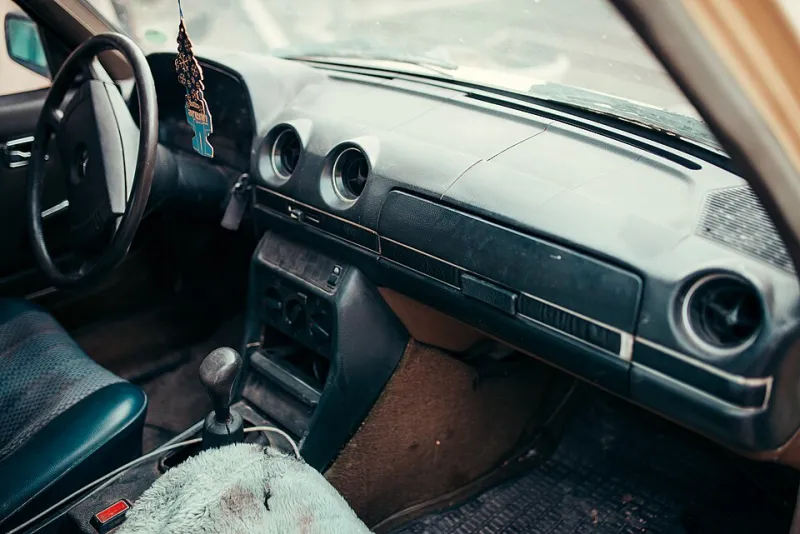
Photo: Shixart1985, CC BY 2.0, via Wikimedia Commons
There's a moment on every long American drive when the playlist stops being background and starts being a problem. Maybe it's hour four, somewhere past the last Buc-ee's sign, when a twelve-minute horn excursion lands and your brother-in-law quietly reaches for his phone. Or it's hour one, still in traffic on the bypass, and the mix is already so polite and reverent that nobody's tapping a foot.
Ambolley's catalog doesn't have that problem — but road mixes built out of it often do. Too many of them get sequenced like a museum exhibit: here's the historical context, here's the deep cut, please admire the significance. A car is not a lecture hall. It's a small, loud, moving room full of people with opinions and a schedule.
What follows is a working approach, not a decree. It assumes a real interstate, real passengers, and a stereo that has to fight wind and tire noise for six or eight hours.
Start With the On-Ramp, Not the Epic
The first twenty minutes of a drive are logistical: merging, lane changes, the argument about whether anyone needs coffee yet. Don't waste that window on a slow build or a sidelong horn meditation. Open with something short and immediate — a vocal burner in the four-to-five-minute range, the kind of cut where the guitar riff and the hook show up before the first exit sign.
"Simigwa Do" is the obvious candidate, and obvious is fine here. It announces the rules of the trip: rhythm first, no homework required. Whatever else you choose for slot one, keep it under six minutes and keep the vocal front and center. You want the first thing anyone says about the mix to be "what is this," not "how long is this."
Road Noise Is a Horn Section's Best Friend
At 70 miles an hour, a car interior eats mid-range detail alive. Subtle fingerpicking, breathy vocals, intricate percussion conversation — much of that disappears under wind buffeting and the drone of all-season tires. Horns punch straight through. Bass carries. Rhythm guitar survives.
This is why Ambolley's horn-forward material works so well at speed: the arrangement itself is a kind of audio compression, prioritizing the frequencies that actually make it to your ears at highway velocity. Lean into that. Put the densest, brassiest, most percussive cuts in the middle of the drive, when fatigue sets in and the mix has to do the work of keeping the driver alert. Save the spacious, quieter, more delicate selections for rest stops, low-speed stretches, or the final hour when the cabin has settled down.
A practical test: play any candidate track at low volume with the windows cracked. If you can still feel the groove, it belongs in the highway section of the mix.
The Passenger Veto and the Two-Song Rule
Every road mix is a small democracy, and democracies need procedures. The one that has worked best for me is the two-song rule: anyone in the car can veto a track at any time, no explanation needed — but the veto costs them, because the person vetoed gets to pick the next two songs outright.
This does three things. It prevents the mix from becoming one person's private DJ set. It stops arguments before they start. And it forces the sequencer to actually think about the audience instead of curating for imagined critics. A vetoed track isn't a failure; it's data.
What the rule also does, quietly, is neutralize the lecture impulse. Nobody exercises a veto because a song is insufficiently historically important. They veto because it's dragging. Trust that signal.
Open Plains, Longer Cuts
Once you clear the metro and the exits start spacing out — I-80 across Nebraska, I-10 past Phoenix, the long nothing between Amarillo and Albuquerque — the rules loosen. This is where the extended highlife cuts earn their runtime. Long tunes with room for horn solos and guitar breaks stretch out nicely against a landscape that isn't asking anything of you.
There's a mechanical reason this works, too. Extended grooves tend to hold a steady pulse, and a steady pulse pairs well with cruise control. The tempo and the tachometer settle into the same unhurried agreement, and the miles stop demanding attention.
Sequence these longer pieces in pairs, not clusters. Two extended cuts, then a changeup: something slower, something minor-key, something with a different rhythmic feel entirely. Three long workouts in a row is how a road mix dies.
The Rest-Stop Reset
Every stop is a chance to reprogram. If the last hour was hot and dense, open the next stretch cool and vocal-led. If the last hour was mellow, come back with the horns. Treat each leg of the drive as its own short set with its own arc, rather than one monolithic sequence stretched over eight hours.
This also solves the novelty problem. A mix that resets at every gas station stays interesting longer than one that just runs downhill from a strong opening.
A Sample First Hour
Think in slots rather than fixed tracklists, since your pressing or streaming library will differ from mine:
- Short vocal opener, under five minutes, hook in the first thirty seconds.
- Guitar-forward mid-tempo groove — keeps the energy but shifts the texture.
- First long cut, positioned around the 25-minute mark, once everyone's settled.
- A slower, minor-key changeup to break the pattern.
- Something chant-like or call-and-response, good for group listening.
- Close the hour on a warm, vocal-heavy track rather than a fade.
What Not to Do
Don't sequence chronologically. Nobody in the car cares that the record came out in 1975 by mile 40; they care whether the song after it keeps the mood.
Don't front-load the obscurities. The rare B-side is a reward for hour five, not an opening argument.
Don't put the quietest, most contemplative track at hour six, when everyone is fried and needs stimulation, not sedation.
And don't talk over the music. No between-track commentary, no "now this next one is important because." If the sequence works, the music explains itself. If it doesn't, the explanation won't save it.
The Last Hour Rule
When the exits start looking familiar and the GPS announces a arrival time in single-digit minutes, shift down. Quieter material, more vocals, less brass. You're landing the plane, not taking off.
The real test of a road mix isn't whether anyone learned anything about Ghanaian highlife. It's whether the drive felt shorter than it was. Get that right, and the listening — and the questions that follow — take care of themselves.