Sixty Seconds to Simigwa: A DJ's Quiet Handoff Into Ambolley's Pulse
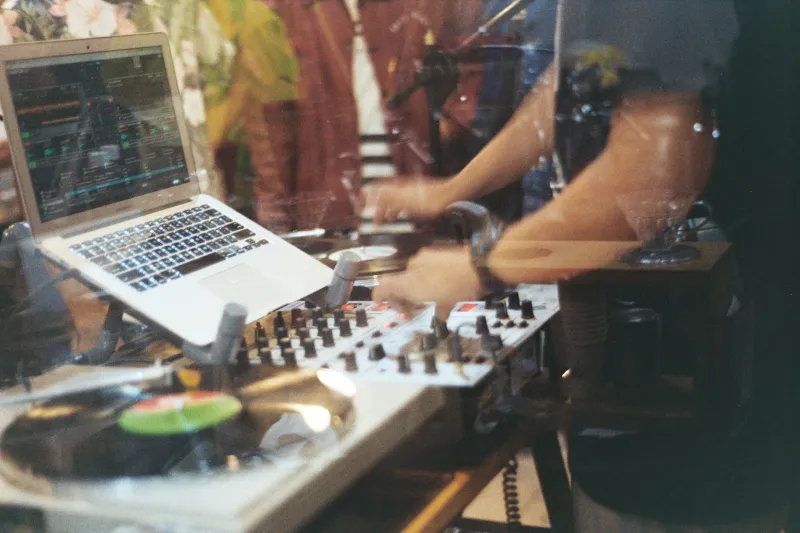
There is a particular look that crosses an American dancefloor when the DJ drops something unfamiliar. It is not disgust. It is calculation. You can either grab the mic and give a lecture, or you can let the groove make the case. The second option works better. Ambolley's simigwa sound is sharp, funky, and built for bodies, but it needs a handoff. The sixty-second rule is simple: give the room one minute of context through sequencing, volume, and a single track, not a history lesson.
Start With the Familiar, Not the Footnote
Do not open cold with a deep cut. Start with something that shares DNA: highlife-adjacent guitar, a walking bass, a horn line that does not bulldoze. In the U.S., that might mean a contemporary Afrobeat track with highlife guitar, a vintage Afro-funk cut, or a familiar highlife standard. The point is to set a bridge, not a trap. The room should be moving before they realize they have left their comfort zone.
The Sixty-Second Handoff
The handoff is a transition, not an announcement. Cue Ambolley's Simigwa or another track with a clear vocal hook and a drum pattern that locks in quickly. Bring it in under the outgoing track's last phrase, on the one, or during a drum break. Let the outgoing track's final bar finish, then let simigwa breathe. Do not talk over the first 30 seconds. Do not explain the term. Let the guitar and bass do the work. By the one-minute mark, the room has heard the pulse, felt the swing, and made a decision. That is the rule.
One Track, Not a Trilogy
Resist the urge to play a three-song mini-set. One track is enough. A trilogy says educational programming; one track says this is a song. Pick a cut with a strong vocal and a groove that does not require a glossary. Simigwa is the obvious entry point, but any Ambolley track with a clean rhythmic hook can work. Play it from the top, not a mid-song excerpt. Let the intro do its job.
Volume Is a Bridge, Not a Weapon
You can signal importance with a small lift, not a wall of sound. Bring the simigwa track in at roughly the same level as the outgoing record, then raise it 2 to 3 dB over the first 20 seconds. That tiny boost tells the room something is happening without hurting anyone's ears. If the venue is a wedding or a basement party, keep the highs smooth; simigwa's guitar can cut, and you want it to invite, not slice.
Reading the Room in Real Time
Watch the floor, not the clock. Look at shoulders first: are they loosening? Then feet. If people are nodding but not stepping, give them another 15 seconds. If the floor thins, do not panic and do not fade out immediately. Let the groove finish its phrase. If it truly clears, blend out on the next downbeat and return to the familiar lane. You can try again later with a different track. The goal is not to force conversion; it is to leave a door open.
What Not to Do
Do not preface the track with a mini-lecture about 1975 or the definition of simigwa. Do not call it world music from the stage. Do not play a lo-fi YouTube rip through a phone. Do not stack three unfamiliar songs back-to-back. And do not apologize for the sound. Ambolley's music is not a curiosity; it is a dance record. Treat it like one.
The Payoff
The sixty-second rule works because it respects the room. You are not selling a history lesson; you are sharing a groove. If someone asks what that was, then you can tell them about Ambolley, the 1975 album, the whole story. But the first job is to get feet moving. Once the floor answers, the lecture is unnecessary. The beat already said it.