Simigwa in the Kitchen: A First-Generation Ghanaian-American Cook's Guide to Highlife and Jollof
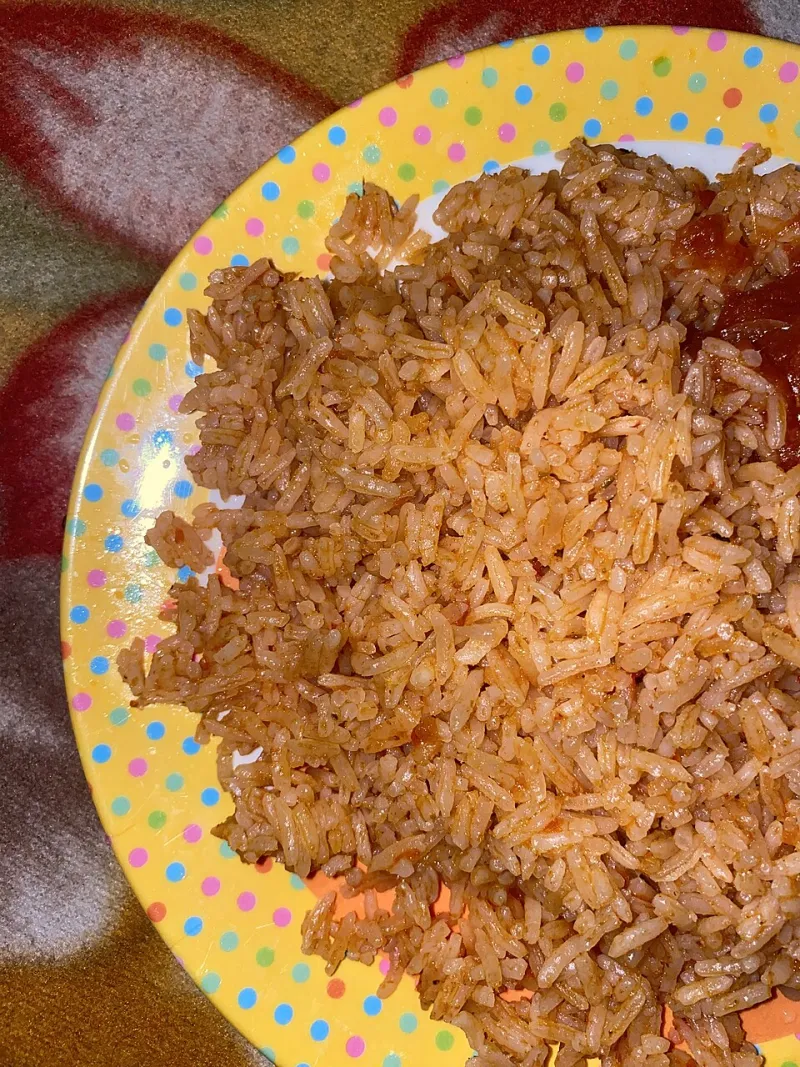
Photo: Maame1Yaa, CC BY-SA 4.0, via Wikimedia Commons
Ask any Ghanaian-American kid what the soundtrack of a Sunday afternoon was, and they won't say a song title. They'll say the sound of a blender grinding scotch bonnets while Daddy's records spun in the living room. Music and food weren't separate activities in our house — they were one activity, with two smells.
So when people ask me how to understand highlife, I tell them the same thing I tell everyone: don't start with your ears. Start with a pot.
The Logic of the Groove
Cooking Ghanaian food is rhythmic by design. There's the steady chop of onions, the long patient fry of tomato paste, the constant stirring that keeps rice from sticking. Highlife — and especially Gyedu-Blay Ambolley's Simigwa sound — matches that logic perfectly. It's groove music, not drama music. It loops, it breathes, it keeps working in the background while your hands do the real labor.
Ambolley famously fused highlife with funk and jazz back in 1975, and that blend is exactly what you want over a hot stove: something familiar enough to cook to, but with enough surprise in it to keep you awake through hour two of the jollof.
Step One: Grinding the Pepper — Put On Something Warm
The beginning of every great Ghanaian cook is loud. Blenders, mortar and pestle, the sizzle of ginger hitting hot oil. You want music with a little swagger here, something that announces itself the way the pepper announces itself to your whole apartment building.
This is the moment for early Ambolley. The horns on those Simigwa-era recordings hit like the first hit of habanero — sharp, bright, unforgettable. Let the record and the blender compete. The blender loses, but it's a good fight.
Step Two: The Base Sauce — Long Songs for a Long Fry
Every jollof lives or dies on the base sauce. Onions, tomatoes, peppers, a stubborn amount of patience. You cannot rush it, and the music needs to respect that.
This is where you stretch out into the wider highlife catalog. Put on a long, rolling track and let it carry you through the twenty minutes of frying down your tomatoes. The best highlife does what a good sauce does: it reduces, it deepens, and it brings everything together. American listeners used to three-minute pop songs might find the length unfamiliar at first. Trust me — so is frying down tomatoes for twenty minutes, and both are worth it.
Step Three: The Rice Hits the Pot — The Turn
There's a specific moment in every Ghanaian kitchen: the sauce goes into the rice, the lid comes down, the heat drops, and suddenly the house gets quiet and hopeful at the same time. The hard work is done; now we wait.
Match it with something mellow. This is the moment for the jazzier side of Ambolley's catalog, the flute-led passages, the conversational guitar work. It's music for standing at the counter with a wooden spoon, sneaking a taste you'll pretend not to have taken.
Step Four: Serving — Turn It Up
Then comes the payoff. The lid lifts, the steam rolls out, and the family appears like they smelled it from three states away (they did). This is when you earn the music back. Loud, joyful, danceable. Let the record announce dinner.
If your guests are Americans new to all this — and in my house, they always are — watch what happens. Nobody needs a lecture on Ghanaian musical history. They just start moving. Then somebody asks, "What is this?" And that question, more than any essay or documentary, is how this music has always traveled.
Why This Matters
For diaspora families, food is often the last cultural practice that survives the generations intact. The language thins out, the visits home get longer apart — but the jollof recipe passes down untouched. Pairing it with highlife gives the next generation a second anchor. They come for the food. They stay, whether they know it or not, for the rhythm underneath it.
And for American food lovers who've never cooked a Ghanaian dish: this is your invitation. You don't need a passport or a family connection. You need a pot, some tomatoes, and a record that refuses to sit still. The Simigwa sound was built for exactly this — living rooms, kitchens, ordinary evenings made extraordinary by a groove that won't quit.
So this weekend, put the album on before the onions hit the oil. Cook the way the music plays: patiently, rhythmically, and with feeling. Then eat well, and dance badly, and know that fifty years of Ghanaian sound is doing its quiet work right there at your dinner table.