Your Library Card Is a Highlife Passport: Getting Simigwa Onto the Shelves
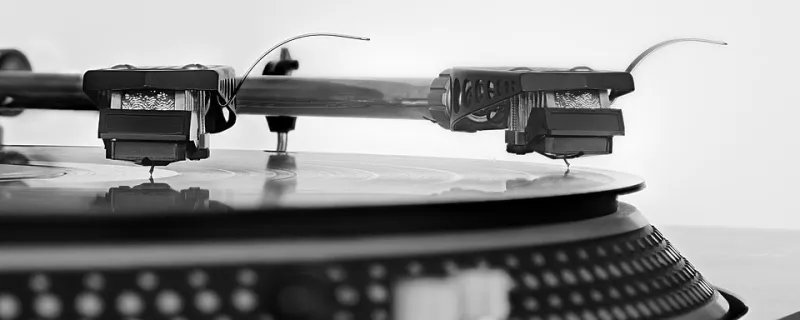
Photo: Franz van Duns, CC BY-SA 4.0, via Wikimedia Commons
Most people treat the library like a vending machine. You walk in, you take what's there, you leave. But a library's music collection isn't weather — it doesn't just happen to you. Somebody chose every single item on that shelf, usually a selector working from a budget, a review journal, and a policy document nobody reads. That's the opening. If you've been wishing your local branch carried Gyedu-Blay Ambolley alongside the Buena Vista Social Club and the Fela reissues, you're not waiting on fate. You're waiting on a purchase order, and purchase orders can be nudged.
What "collection development" actually means
Collection development is the librarian's term for deciding what to buy, what to keep, and what to let go. In a mid-sized US public library, the person making those calls probably isn't a music specialist. They might be a generalist adult-services librarian juggling fiction, cookbooks, and DVDs, buying world music through a jobber like Midwest Tape or Ingram using pre-set selection profiles. That's why the shelf skews toward the safe stuff — greatest-hits compilations,Putumayo samplers, the same twelve African artists every time.
That's not a knock on librarians. It's a description of a system built on limited time. A selector who gets a clear, specific, well-argued request from a patron has been handed a shortcut: a reason to spend a few dollars and a name to type into the vendor portal. Requests get logged, and logged requests become evidence that a title has local demand. Evidence is currency.
Start with the form, not the crusade
Nearly every public library in the country has a "Suggest a Purchase" or "Request a Title" link buried in its website — usually under Services, or at the bottom of the catalog page. Fill it out. That's step one, and it takes four minutes.
A few things raise your odds:
- Be specific. Not "more African music" but Simigwa by Gyedu-Blay Ambolley, the 1975 album, or a current reissue if one is in print. Selectors can't order a vibe.
- Name the format. CD is still the workhorse of library music collections, even as vinyl listening rooms pop up in hipper systems. Say which one you want.
- Mention the catalog gap. If your system owns zero Ambolley titles, say so. Selectors care about blind spots.
- Offer to help. Librarians love a patron who volunteers labor. More on that below.
A request note you can copy
Here's a template you can paste into that form and adjust. Keep it short. Nobody has time for your essay, and neither does the selector.
Hello — I'd like to suggest adding Simigwa (1975) by Ghanaian highlife artist Gyedu-Blay Ambolley to the music collection. Ambolley is a foundational figure in West African highlife and widely credited with pioneering a spoken-word vocal style in the 1970s that predates a lot of what we now call rap. Our system currently holds no titles by him, and I think this record would fill a real gap in the world-music section alongside our Afrobeat and Afro-Cuban holdings. I'd also be glad to host or help with a listening event if that's useful. Thanks for considering.
That last sentence is the one that changes the conversation. A purchase request is paperwork. A purchase request plus a program is a small gift.
Where vinyl fits in
Here's a wrinkle worth knowing: library vinyl is having a moment. Some systems now run record-listening rooms, lend LPs in sturdy sleeves, or host turntable nights. Others won't touch vinyl because of damage and theft concerns and stick to CD and streaming. Both are fine. If your library is CD-and-streaming only, ask about databases like Hoopla or Freegal, where a licensed Ambolley track can show up without anyone buying a physical object. If your library is vinyl-forward, go ahead and ask for the LP — just accept that circulation policies vary wildly from system to system.
Don't forget interlibrary loan either. Requesting a title through ILL puts it in the shared catalog data and lets you hear it without your branch spending a dime.
Turning an acquisition into an introduction
A CD on a shelf is a secret. A listening event is a door. Once the record is in the building, pitch something small — forty-five minutes in a meeting room, a Saturday afternoon, no pressure.
Good formats that work in American libraries:
The listening session. Play three tracks, talk for ten minutes, play three more. Explain that Ambolley's clipped, rhythmic vocal delivery on Simigwa came years before most Americans had heard anything like rapping on a record. Let people hear it before you explain it.
The listening-plus-hands. Bring a conga or a djembe and let people try the clave-adjacent feel that drives highlife guitar. Libraries love hands-on programming because it photographs well and gets butts in seats.
The pairing night. Screen a short documentary on Ghanaian independence-era music, or pair the record with a talk about West African port cities and the brass-band and palm-wine roots that fed into highlife. Call it a listening and conversation evening and put out cookies.
The teen angle. High schoolers digging into the history of hip-hop respond well to the "this predates what you think you know" hook. Offer to do it for a teen advisory group.
The long game
One request probably won't transform your library's world-music section overnight. But requests compound. Three patrons asking for the same artist in a year is a data point. Ten is a mandate. And the record itself does the rest of the work — it sits in a catalog, in a shared system, in a place where a fourteen-year-old with a library card can stumble onto a 1975 Ghanaian groove she'd never have found on a streaming homepage.
That's the whole argument, really. The Simigwa sound doesn't need a museum. It needs a shelf, a barcode, and someone with a card who cared enough to fill out a form.