The Rhythm That Started a Conversation: Decoding Simigwa for New Listeners
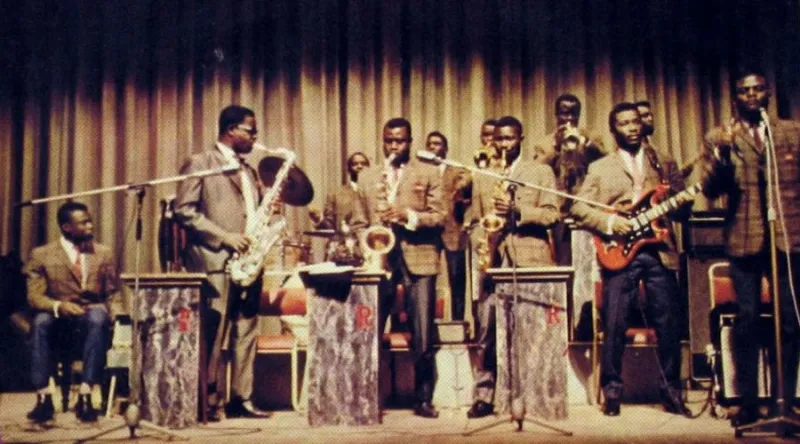
Photo: vintage Ghana highlife band performing live on stage with horns and guitars, via static.bandonthewall.org
Ask a room full of American music fans to name a Ghanaian genre and you'll mostly get silence — maybe a guess at Afrobeat, which is Nigerian anyway. That silence is exactly why we're here. Simigwa isn't a footnote. It's one of the great missing links between West African highlife and the funk-and-rap era that took over American radio.
So What Exactly Is Simigwa?
Strip it down and you've got three ingredients that shouldn't work together but absolutely do.
Highlife guitar. The backbone is classic Ghanaian highlife — those bright, interlocking guitar lines that float over everything like conversation. Highlife was the dance music of Ghana's post-independence years, and it carries a swing that's warmer and looser than anything coming out of Motown at the time.
American funk. Then comes the rhythm section. Tight bass, snapping drums, horns that punch instead of decorate. Ambolley absorbed James Brown and the whole US soul axis that was blasting into Ghana on records and radio, and he folded it straight into highlife's DNA. The result grooves harder than traditional highlife ever did.
Rap-like vocals. Here's the part that blows people's minds. On the 1975 album that started it all, the vocal delivery is rhythmic, talk-like, half-sung and half-spoken — riding the beat the way MCs would a few years later in the Bronx. Call it proto-rap, call it rap-before-rap. Either way, it happened in Accra before it happened in New York.
Why It Matters to American Ears
If you're a hip-hop head, Simigwa is a revelation: the rhythmic vocal thing you thought was born on Sedgwick Avenue was already in motion across the Atlantic. If you're an Afrobeat fan, you'll hear a cousin — same funk influence, different temperament. Where Fela went big and confrontational, Simigwa stayed sly, playful, conversational.
And if you're just a crate-digger who stumbled in here after buying a reissue: welcome. You're about to understand why original pressings change hands for serious money.
Your Starter Playlist
Don't overthink it. Start here:
- "Simigwa-Do" — the mission statement. If this doesn't move you, check your pulse.
- Any track from the 1975 debut — hear the formula assembled for the first time.
- Ambolley's later highlife-funk hybrids — proof the sound kept evolving instead of becoming a museum piece.
- A classic highlife cut from the 60s — go backward to hear the foundation Ambolley built on.
- An early hip-hop record — Grandmaster Flash, say — then play it back to back with Simigwa and hear the conversation across continents.
One Listen Is Never Enough
The trick with Simigwa is that it doesn't announce itself. It sneaks up on the second or third spin, when the guitar lines start talking to each other and you realize the vocal isn't singing so much as drumming with words. That's when it clicks. That's when you're in.
The Simigwa sound never went away — it just waited for the rest of the world to catch up. Consider this your official invitation.