Coltrane, Fela, and Now Simigwa: Inside the American Lecture Hall Where Highlife Gets Academic

There's a moment that plays out in classrooms from Ann Arbor to Austin. A professor drops the needle — or more likely, cues the streaming file — on a record recorded half a century ago in a Ghanaian port city. Twenty seconds in, a student raises a hand: "Wait, when was this made?"
That record is Simigwa, and that question is exactly why Gyedu-Blay Ambolley is showing up on American syllabi in 2024 and beyond.
The Syllabus Shuffle
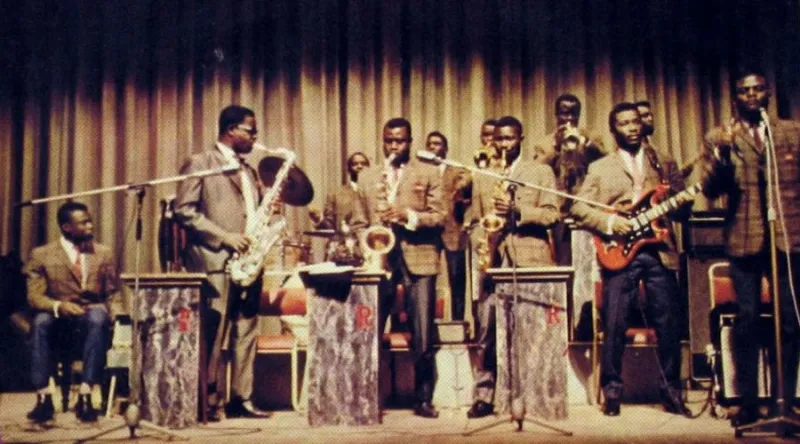
For decades, the canon of African music taught in US universities ran a fairly predictable route: palm-wine guitar as a precursor, Fela Kuti as the Afrobeat centerpiece, maybe King Sunny Adé for juju representation. Highlife, when it appeared at all, got a week — usually E.T. Mensah and the sweet-band era.
That's changing. Dr. Marlene Osei-Bonsu, who teaches West African popular music at a large Midwestern state school, put it bluntly when we reached her by phone: "Students were learning that Afrobeat came from nowhere. It didn't. It came from highlife, and highlife didn't stop evolving in 1960. Simigwa is the proof — it's highlife folding in funk and jazz improvisation and doing something nobody had a category for."
Her course now pairs the 1975 album directly beside Coltrane's A Love Supreme. The assignment: track how both records treat the groove as a launching pad rather than a cage.
Why 1975 Sekondi-Takoradi Plays in 2020s America
Part of the appeal is the story itself. Ambolley didn't emerge from a government-sponsored cultural program or a major label machine. He was a young musician in Ghana's Western Region who heard American funk records, heard the local highlife orchestras, and simply fused what was in the air. He called the result simigwa — a genre he essentially invented and named himself.
American music departments love a case study like that. It disrupts the tidy narrative of influence flowing one direction across the Atlantic. As one graduate student at a New York conservatory told us, "We spend semesters on how jazz shaped the world. Here's a record showing what the world sent back — and what it invented on its own terms."
There's also the sound. The horns swing, the guitar lines talk back to the drums, and the whole thing feels closer to a loft-jazz session in the Village than what most students expect from a so-called "world music" unit. Professors report that students who zone out during lecture often perk up the moment the record starts.
First Contact: Students Discover Highlife
We asked a few undergraduates what struck them most. One, a production major in Georgia, said the record "sounds like it was sampled by J Dilla in another life." Another admitted she'd only known highlife as "the music my Ghanaian roommate's mom plays" — and is now writing her term paper on the Sekondi-Takoradi scene of the 1970s.
That's the quiet revolution happening in these classrooms. Highlife stops being an archival curiosity and becomes a living lineage — one that runs through Ambolley's fifty-year catalog, through the Ghanaian dance bands that never stopped touring, and into the ears of American kids who will carry it somewhere new.
The Legacy Angle
For an artist, being canonized has a double edge. Syllabi can embalm. But the professors we spoke with insist that's not the goal. "I don't want students to study Simigwa," Dr. Osei-Bonsu said. "I want them to argue with it. To hear where it broke the rules and ask what rules they can break."
That's the right instinct. The record was never a museum piece. It was a dare — thrown down in 1975 by a musician who refused to wait for permission. Half a century later, it's still landing in the right ears. Some of them are sitting in a lecture hall in Ohio, hearing the future for the first time.